Sapphic Book Review: “The Lamb” by Lucy Rose
ARC & Gifted Book Disclosure
I sometimes receive free books—advance reader copies (ARCs), PR review copies, or complimentary galleys from publishers, authors, or services like NetGalley. These gifts do not influence my opinions or ratings. All such books are clearly noted in the reviews. Honest feedback is always my priority.
Please read my full ARC & Gifted Book Disclosure Policy for more information.
Affiliate Disclosure
This post contains affiliate links. If you click on these links and make a purchase, I earn a small commission at no extra cost to you. As an affiliate, I am committed to providing you with valuable content while maintaining transparency about my affiliate partnerships. All affiliate links are accompanied by an asterisk "*".
Your support through these affiliate links helps sustain this website and allows me to continue sharing quality information and recommendations. Please rest assured that the products or services I promote through these links are ones I genuinely believe in.
Your trust and satisfaction are of utmost importance to me, and I will always strive to provide honest and unbiased reviews and recommendations. Please see my book blog's full Affiliate Policy for more details.
Thank you for your support! <3
A folk-horror exploration of mothers, daughters, and the dangers of patriarchy.
Rating:⭐⭐⭐⭐ - 4 out of 5 stars
Format: Physical copy, purchased new
🌶️ Spice Level: None
[Review also available on GoodReads.]
What to Know About “The Lamb” by Lucy Rose
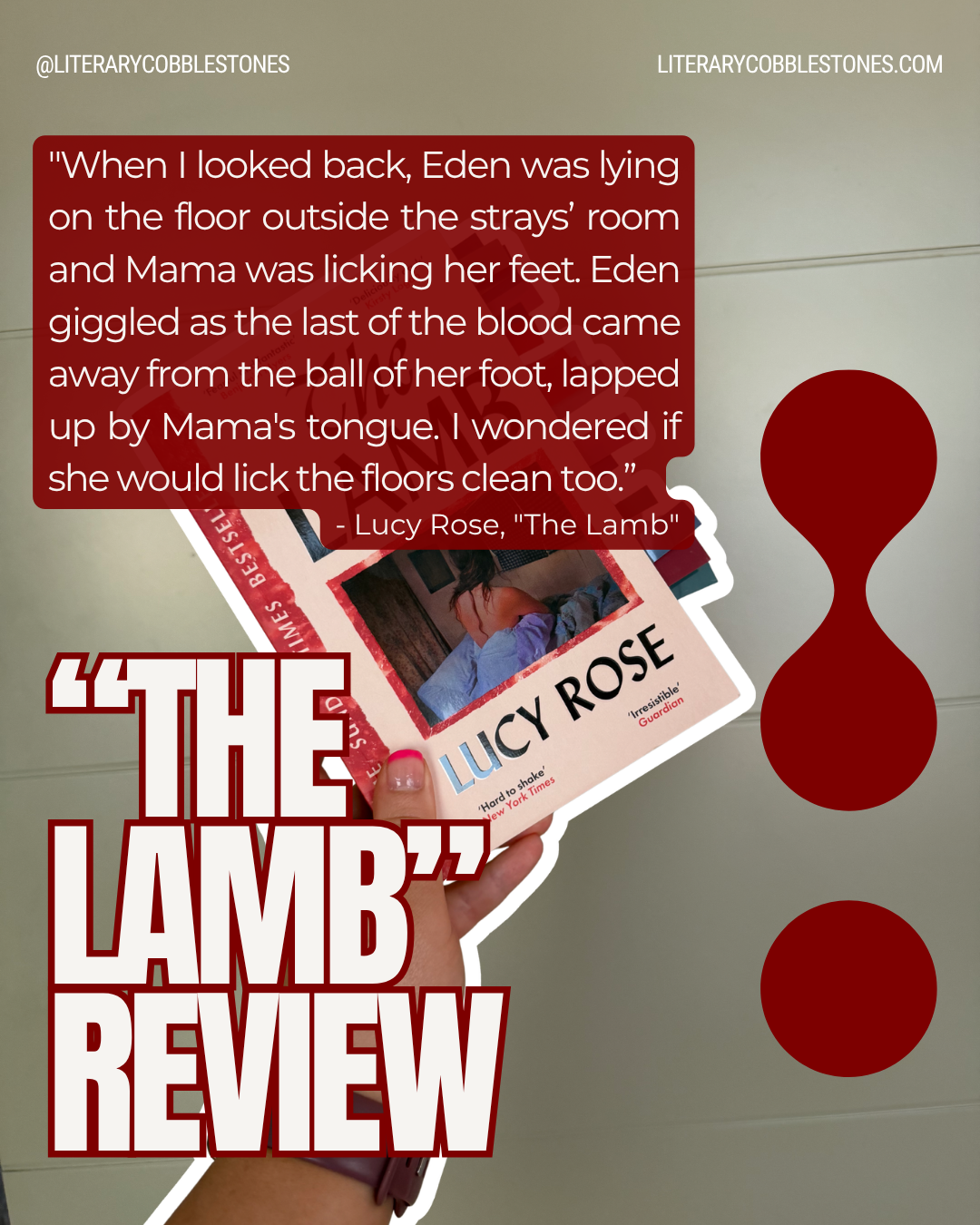
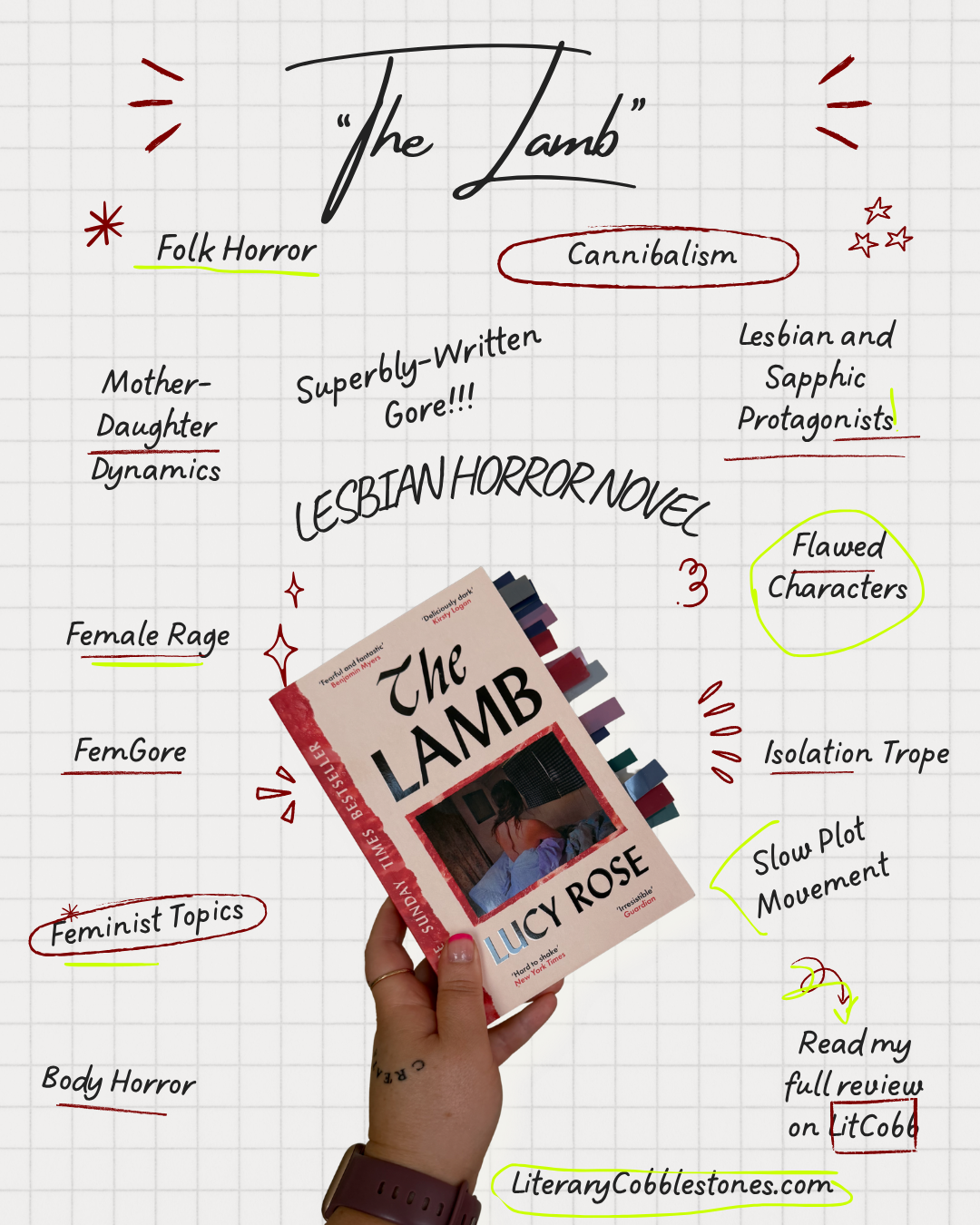
The Quick & Dirty Reading Details
Folk Horror
Lesbian & Sapphic Protagonists
Female Rage
FemGore
Rural Setting
Isolation
Cannibalism
Feminist
Flawed Characters
Mother-Daughter Dynamics
Body Horror
Superbly-Written Gore
Slow Plot Movement
POTENTIAL TRIGGERS: Cannibalism, Child Neglect, Abuse (Physical & Mental), Body Mutilation, Homicide, Gore, Animal Death (Off-Page)
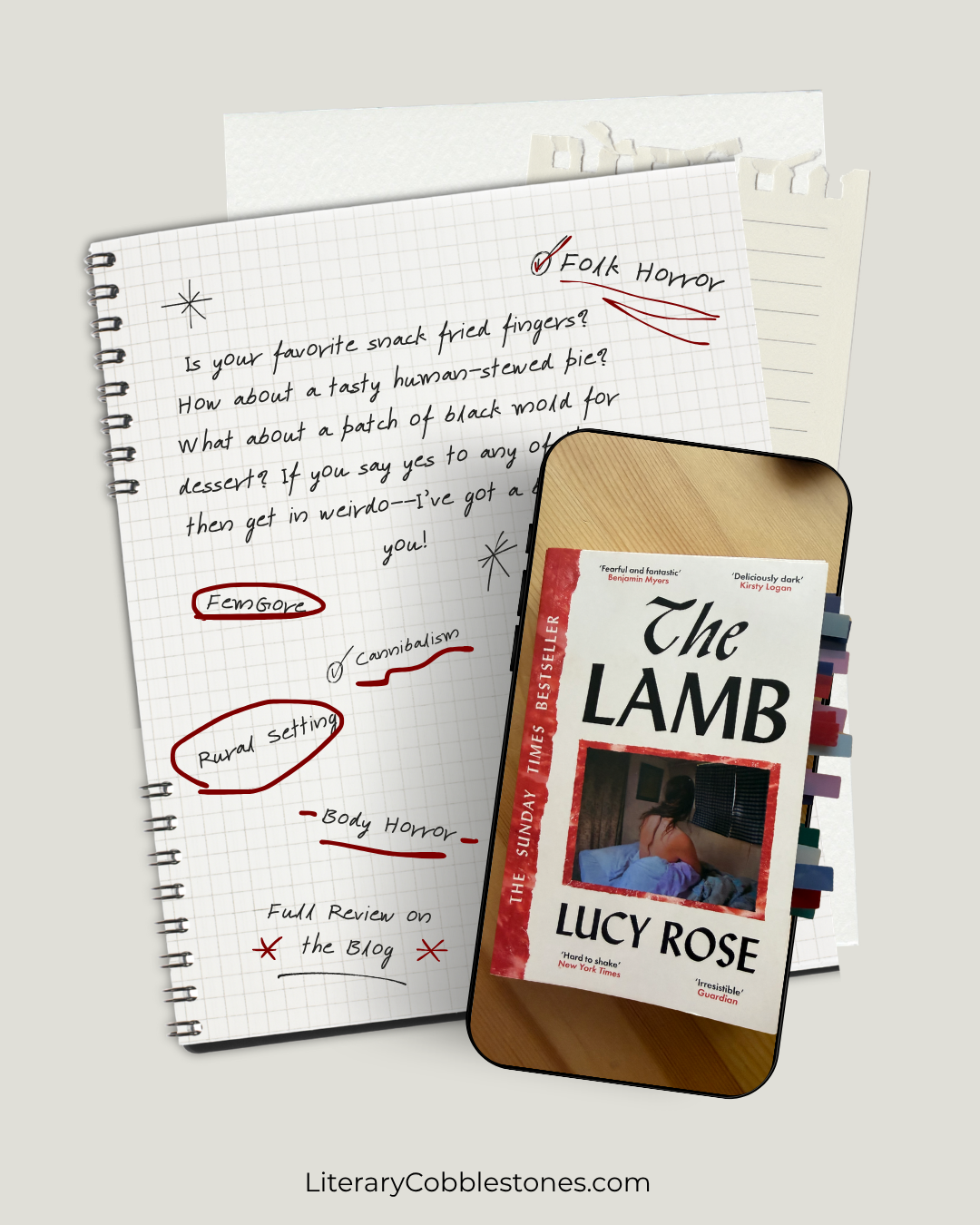
Is your favorite snack fried fingers? How about a tasty human-stewed pie? What about a patch of black mold for dessert? If you say yes to any of those, then get in weirdo--I've got a book for you!
Grotesque aside, this lesbian folk horror novel will crawl under your skin and stay there long after the last page. I read "The Lamb” four months ago, and I still feel a wave of melancholy from the pit of my stomach every time I think about it. So, who's ready to be emotionally traumatized? Hands Up Let's dig into my sapphic book review of "The Lamb” by Lucy Rose.
The Plot of “The Lamb”
The story focuses on 11-year-old Margot and her mother, Ruth (or 'Mama’ as she's often referred), who reside in a run-down cottage in rural Cumbria. Surrounded by scenic forests, valleys, and peaks, the troubled duo often find themselves with unexpected guests looking for help or shelter. Unfortunately, these "strays” typically end up as dinner, that is, until one woman, Eden, not only stays alive but joins the family. The lesbian horror novel follows the changing dynamics as they quickly morph from toxic to dangerous, putting the need for Margot's existence in question, forcing the young girl to navigate her day-to-day carefully in order to survive.
What’s the “The Lamb” Spice Level?
Looking for a spicy, sapphic horror novel? This one isn't it. As the protagonist in "The Lamb’ is only 11 years old, there isn't a focus on romance. There are elements of romance, including a sapphic relationship between Ruth and Eden, but any bits of spice are witnessed through interactions of Mama's, but it's limited in scope and not meant to be a draw to the reader.
Spice Level: None
“The Lamb” Book Review
My Thoughts on Lucy Rose's Folk-Horror Novel
We don't get to pick our parents, but if Margot got to, I think she'd still choose Mama. Even at only 11 years old, her loyalty is engraved on her bones and signed with love, which makes her journey in the novel even more devastating. But before we can get to the end, we need to start at the beginning.
Wears Its Grotesque On Its Sleeve
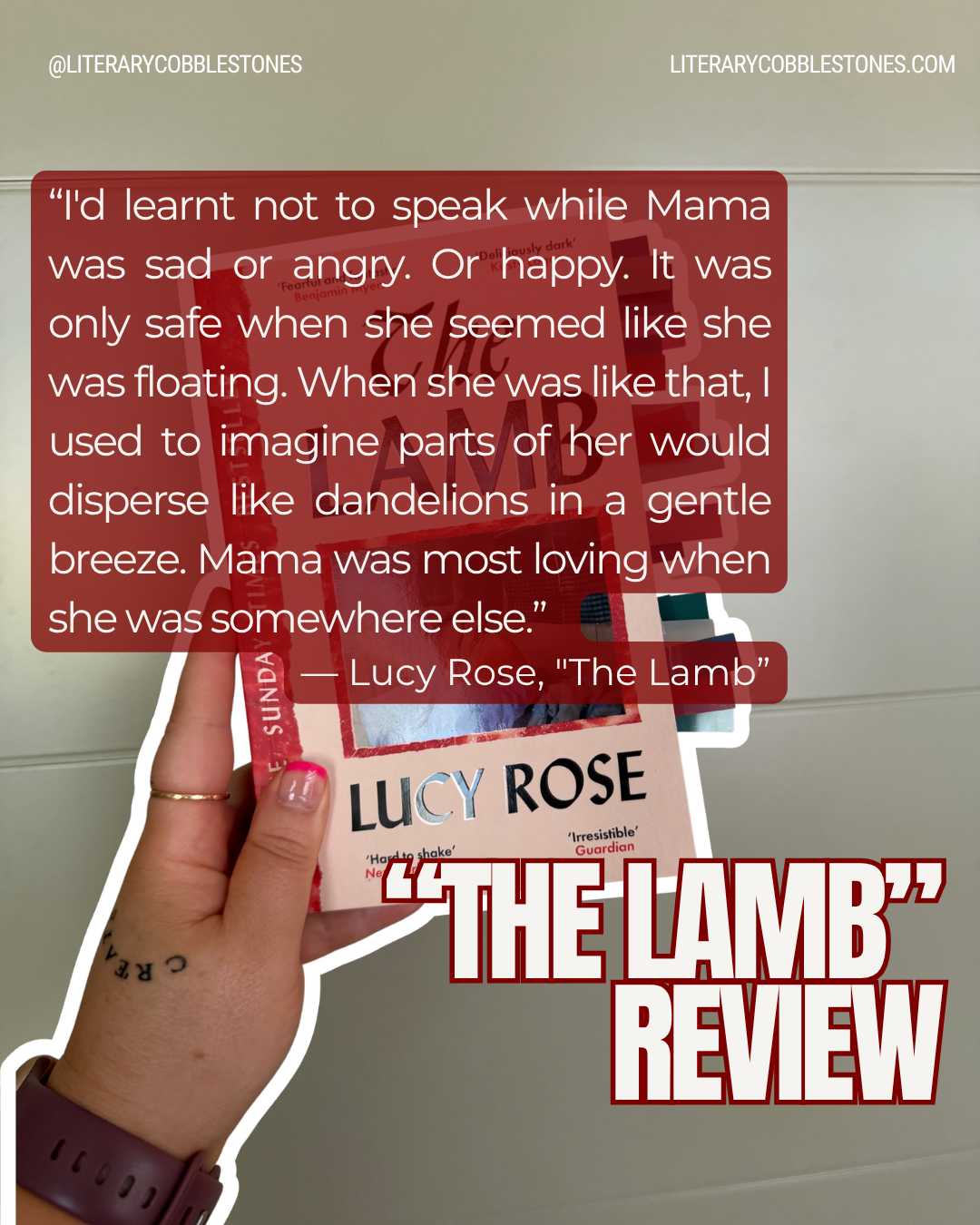
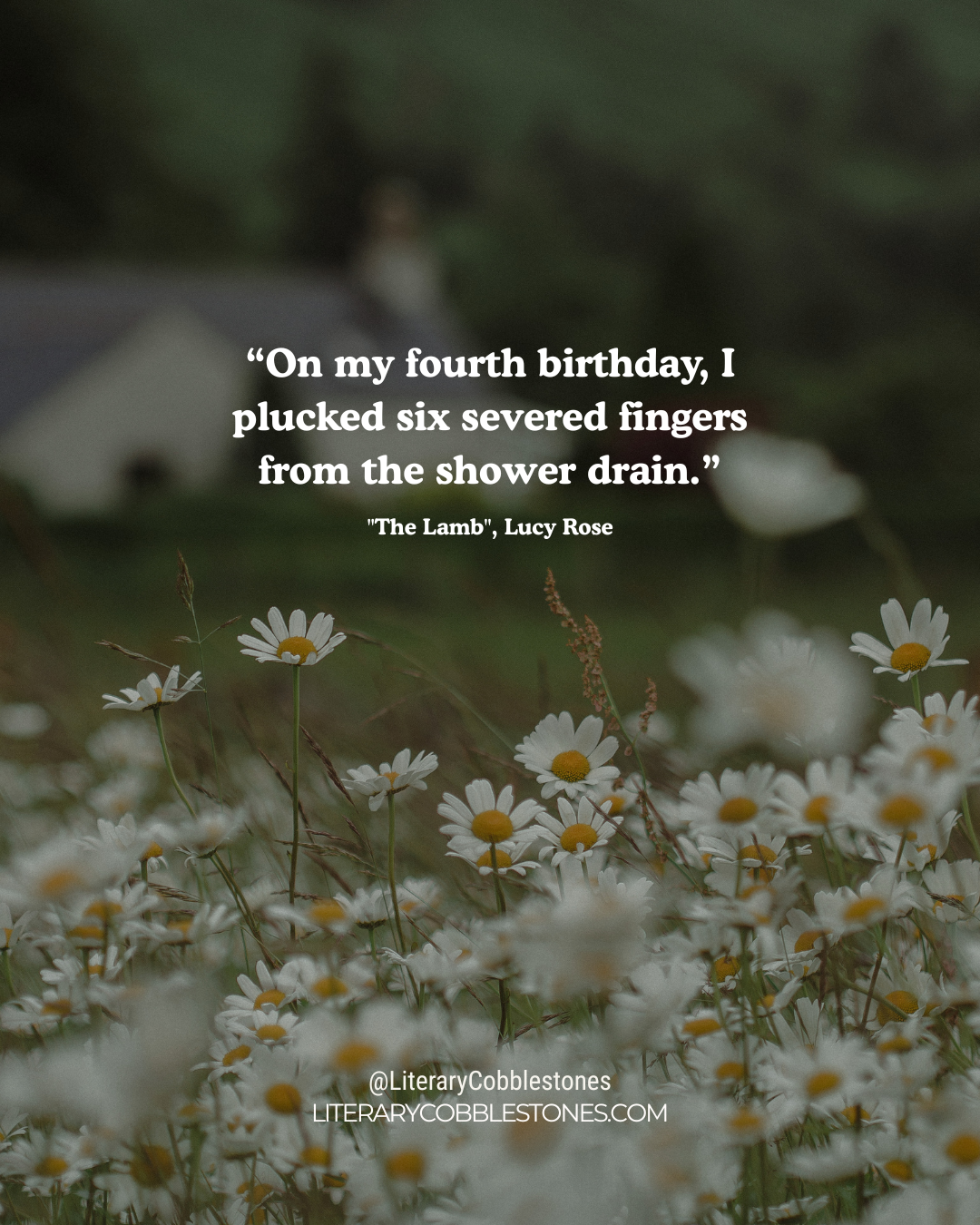
“The Lamb” had me from the first line: “On my fourth birthday, I plucked six severed fingers from the shower drain.” All right, tell me more. And Rose does. Her writing transcends to the expertise of an author with decades of descriptive practice for every scene of gore, making the grotesque into written artwork worthy of worship from horror fans near and far:
"When I looked back, Eden was lying on the floor outside the strays’ room, and Mama was licking her feet. Eden giggled as the last of the blood came away from the ball of her foot, lapped up by Mama's tongue. I wondered if she would lick the floors clean too.”
It is an incredible talent to create such vivid imagery, which is further powered by a blunt delivery. Not only are these unsettling scenes given to the reader, but they're done in such a direct, shock-and-awe manner that it sticks; it traumatizes, crawling under the skin and becoming a permanent part of your psyche.
Eating the Patriarchy vs. Eating Your Heart Out
At its heart, the lesbian horror novel is centered around female rage and love. For the former, Ruth followed the rules early on in her life and still ended up disappointed, and while disappointment to cannibalism may seem like a far reach, it serves as a mechanism to take back her power. When it comes to her eating habits, she's in control, tossing away the concept of a meek, mild, and helpless woman, and instead, stepping into the role of the predator.
She even uses the system against itself when targeting her victims:
“She needed my help to lure the strays because, in her words, there is no one more vulnerable than a lone mother and her child. And that is who we were to these people. We were stories and preconceptions and prejudgements. She let them believe we were weak, but we would be their end.”
This knowledge and choice of manipulation pushes the narrative beyond simply using cannibalism to gain bodily autonomy into the sphere of the monstrous feminine. She's not just gaining control; she's getting revenge on the patriarchy as a whole.
Margot, on the other hand, approaches dietary habits through the lens of love. Traditionally, the use of cannibalism as a metaphor for love in literature focuses on romantic relationships, where sexual hunger manifests as a physical appetite, a desire to consume another to be closer to them. However, in this case, it serves to highlight the complicated relationships between mothers and daughters, showcasing a daughter's desperation to be loved by her mother.
Margot goes along with her mother's appetite for flesh to earn her love:
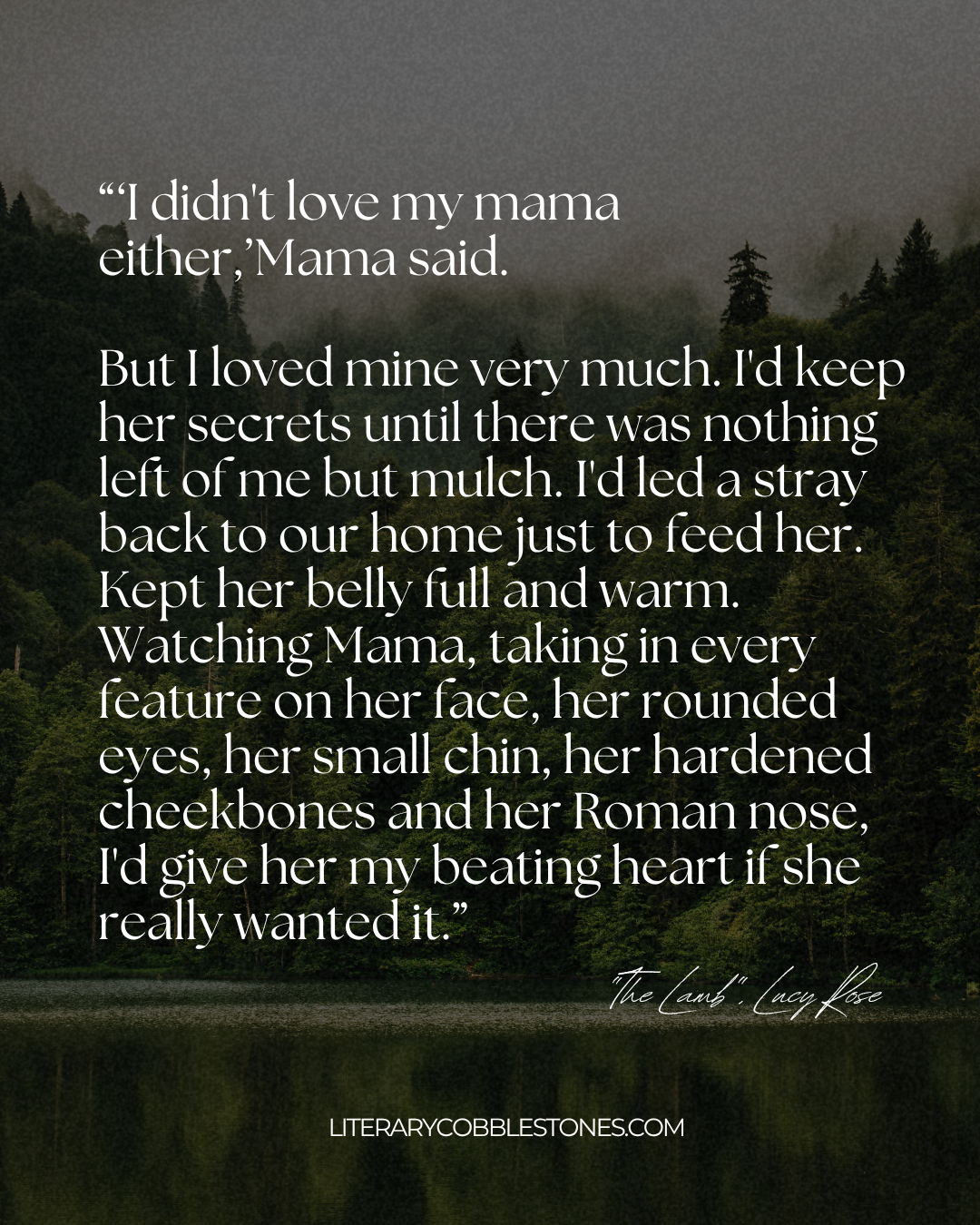
“‘I didn't love my mama either,’ Mama said.
But I loved mine very much. I'd keep her secrets until there was nothing left of me but mulch. I'd lead a stray back to our home just to feed her. Kept her belly full and warm. Watching Mama, taking in every feature on her face, her rounded eyes, her small chin, her hardened cheekbones and her Roman nose, I'd give her my beating heart if she really wanted it.”
Such desperation stands in major contrast to her parent's narcissism and abusive behavior. SPOILER Considering Ruth's rage is eventually directed at Margot, resulting in her murder, it makes the protagonist's yearning for her mother's love that much more devastating. And that's exactly why the story lingers for readers.
Repetition & Pacing Threaten the Impact
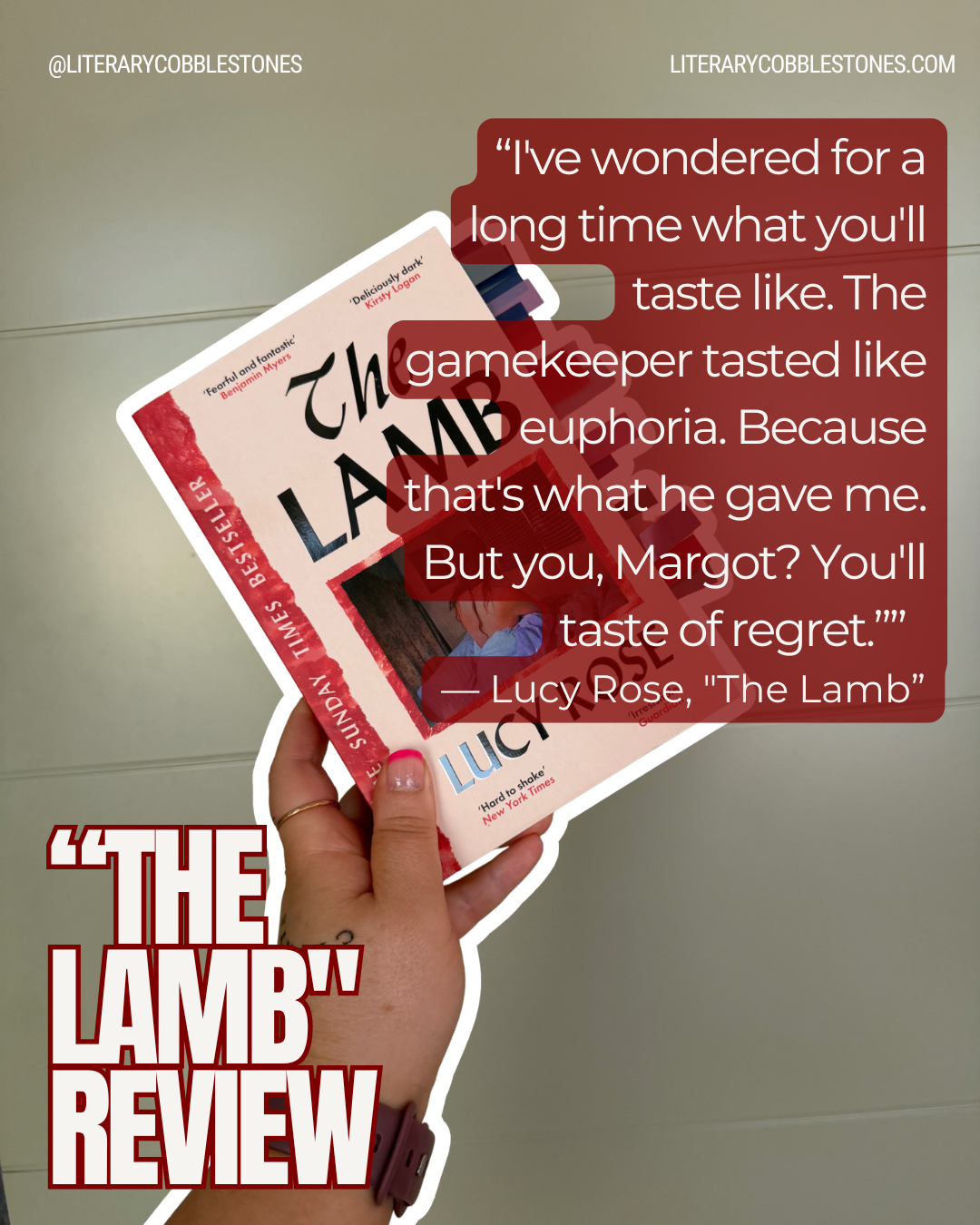
The main struggle in the sapphic horror novel is the repetition, which occurs in two separate manners. The most impactful is the repetition of events, where hunting-to-feast scenes occur over and over again. It ends up lengthening out the middle of the novel unnecessarily, making it a challenge to push through.
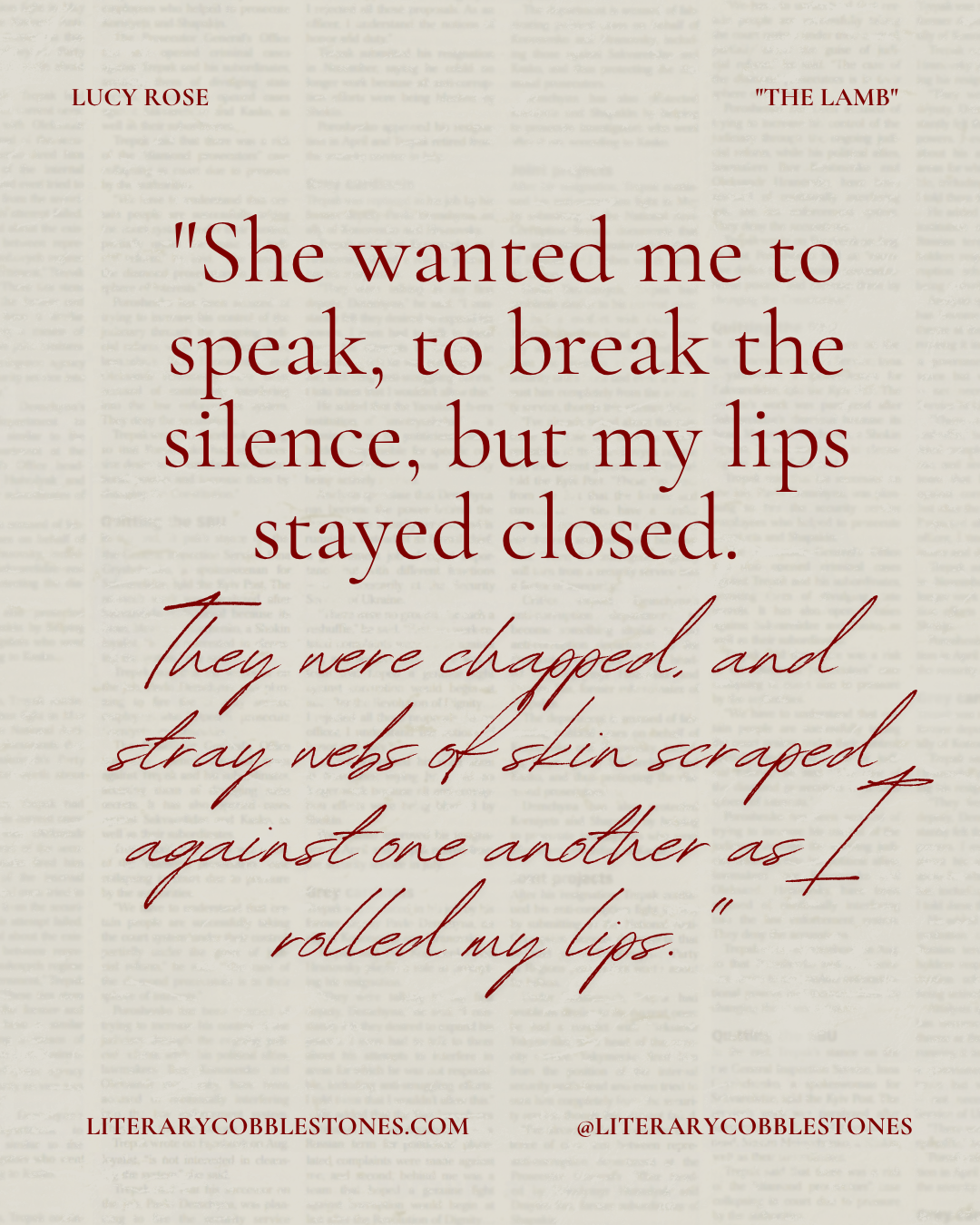
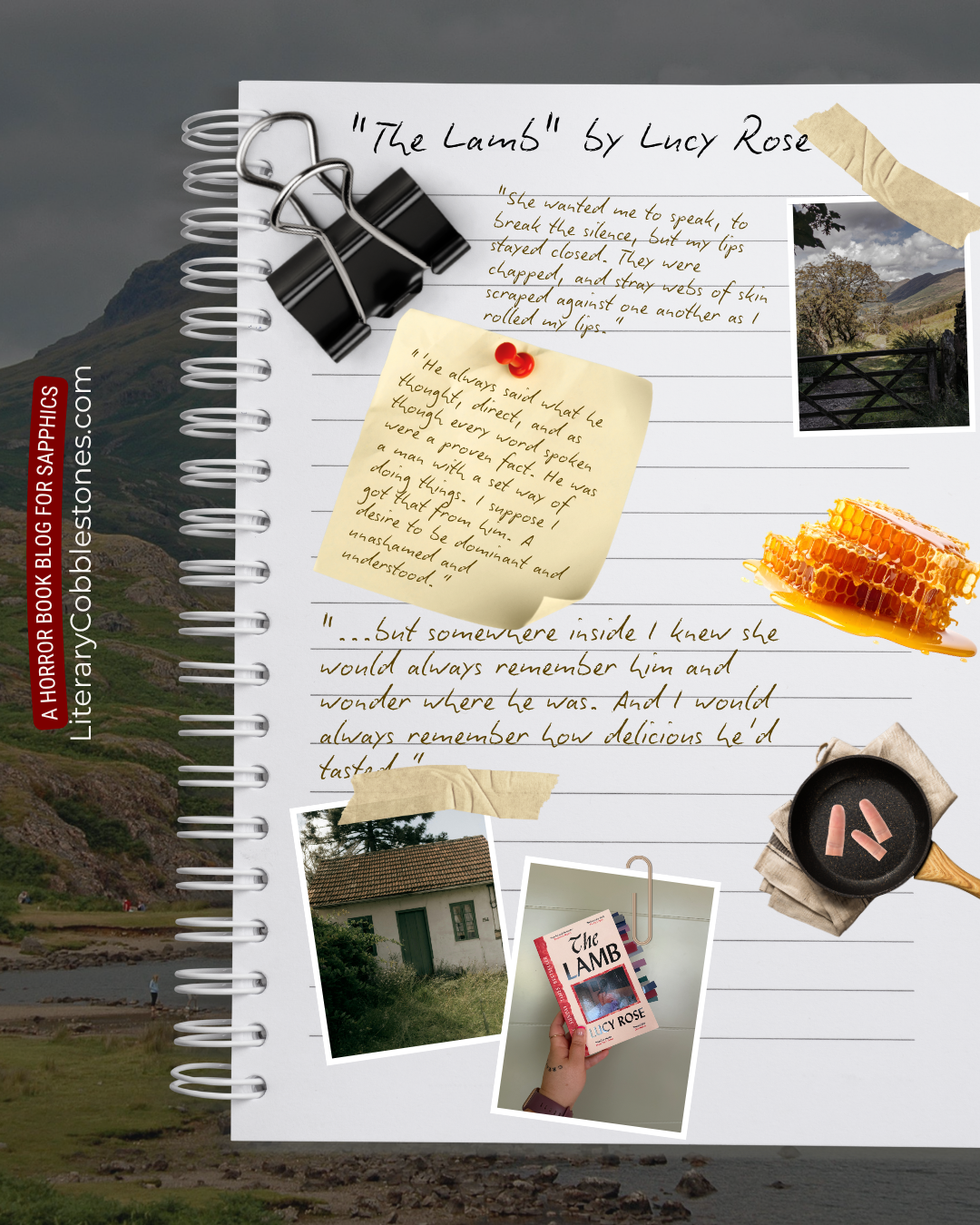
There is also repetition of word choice that is distracting in certain instances, like: "She wanted me to speak, to break the silence, but my lips stayed closed. They were chapped, and stray webs of skin scraped against one another as I rolled my lips.” While technically small, such oversights pull away from the storyline, impacting both the pace and the immersion level.
Put Down the Page But Not the Story
Earning an English Lit degree requires developing a very specific approach to the written word. Since finishing mine, I've not picked up a single book that I didn't approach with a critical eye, and add that to the nature of book reviews, then pointing out issues of any literary devices, like pacing, is expected. However, as a reader for enjoyment, my real judgement of a horror novel rests on its ability to linger, and "The Lamb” goes above and beyond for that criteria. For that reason alone, it deserves a spot on every horror fan's bookshelf.
Would I Recommend: Yes! Please, read it. Feel devastated with me.
Would I Re-Read: Yes, to feed the rage and melancholy in one go
Have you read it yet? I'd LOVE to know your thoughts! Drop me a line on Instagram, and lmk if you agree with my review or not. If it's the latter, I promise I won't take it personally! [That's a lie, I totally will. :) ]
Buy “The Lamb” by Lucy Rose
[This is an affiliate link. If you make a purchase using the link, I earn a small commission at no additional charge to you. Such support helps cover the operational costs of my book blog and allows me to continue my passion project. Thank you for your support!]
Thanks for sticking around to the end of my book review! If you're interested in reading this sapphic novel for yourself, you can grab a copy via my affiliate link on Bookshop.org*.
Bookshop.org: Buy “The Lamb” on Bookshop.org* to support independent bookstores.
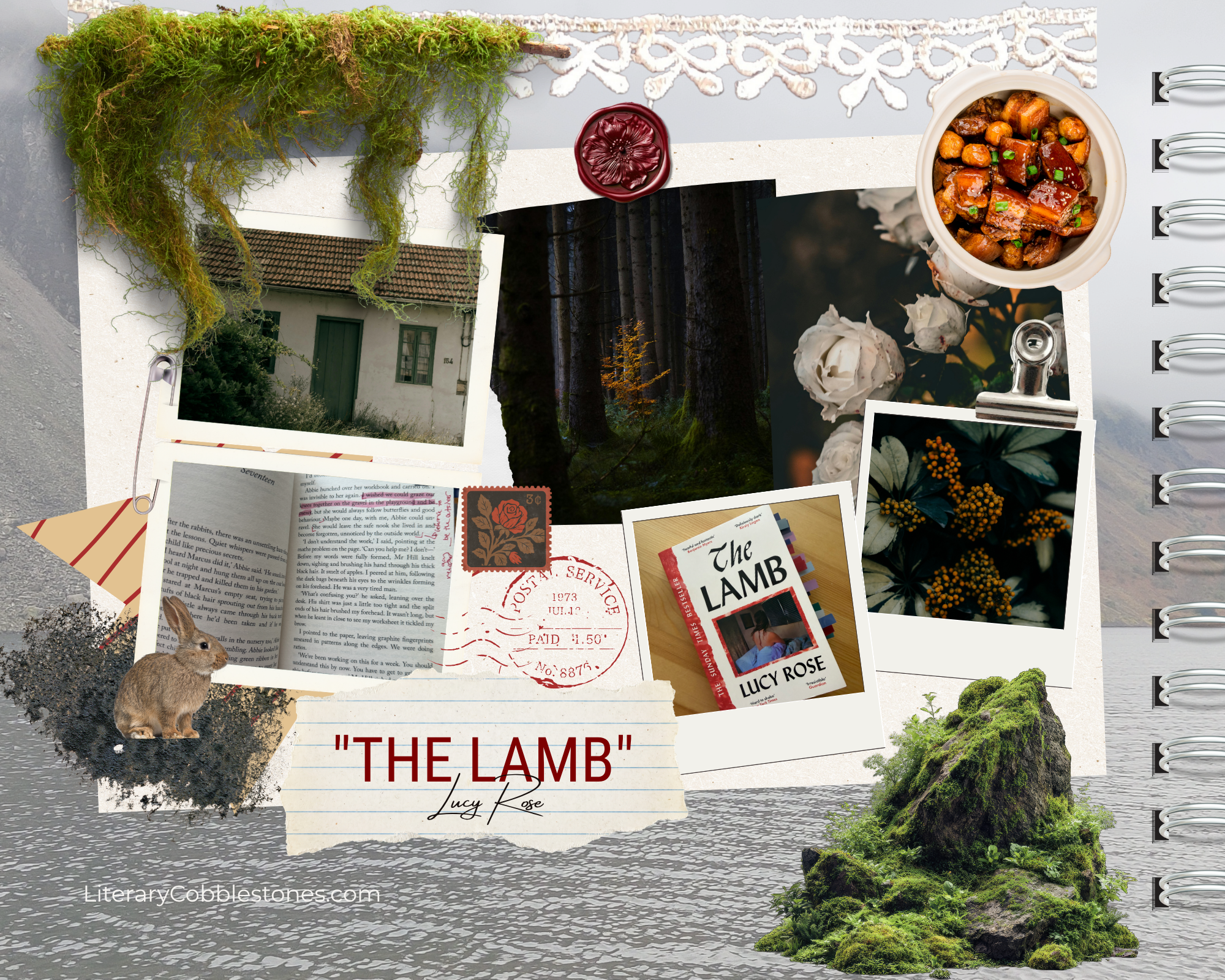
Reading Aesthetic: “The Lamb”
Want even more “The Lamb”? As a zine and collage fanatic, I can’t help but create an artistic visual element for each of my book reviews. See the full post >> Reading Moodboard “The Lamb”.
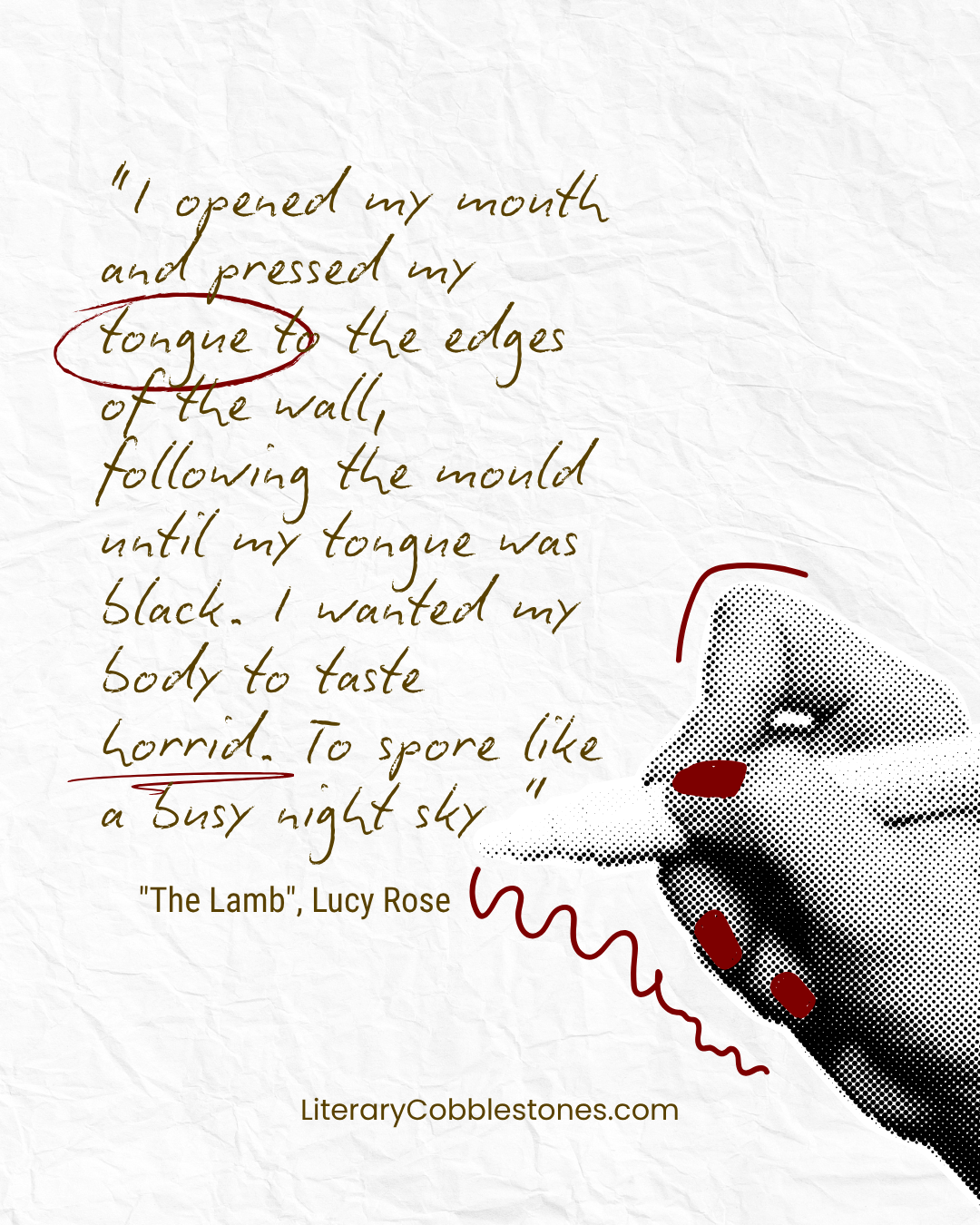
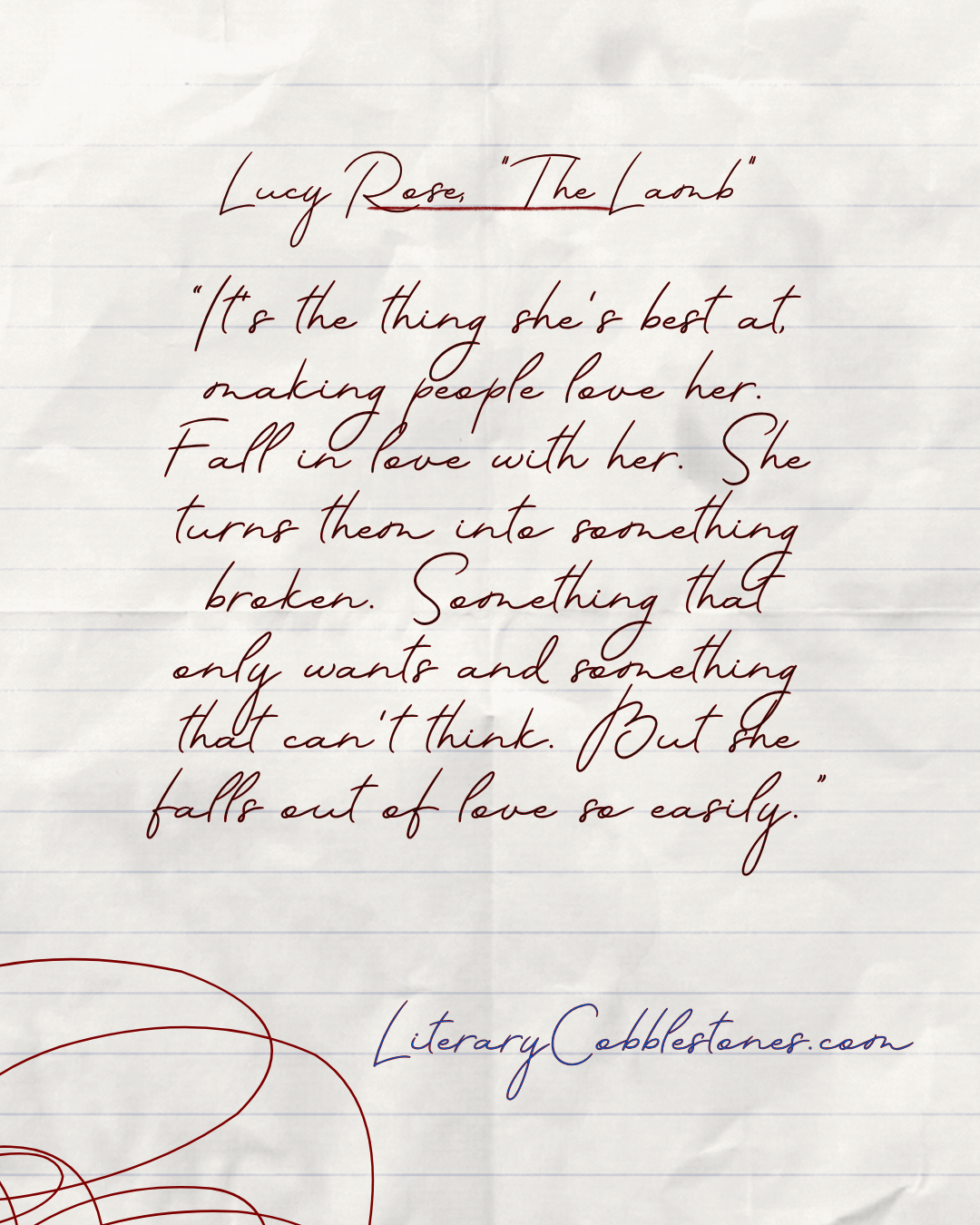
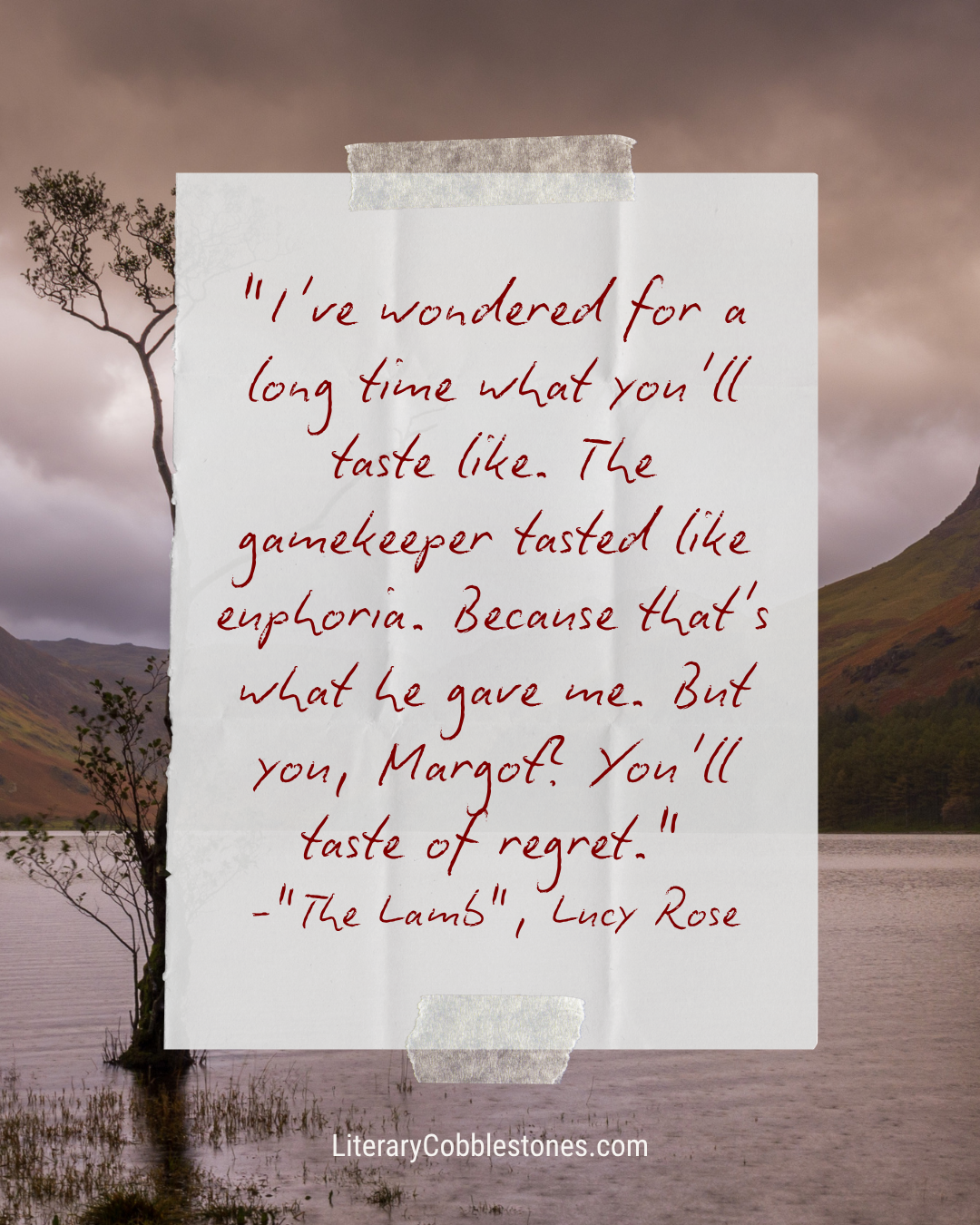
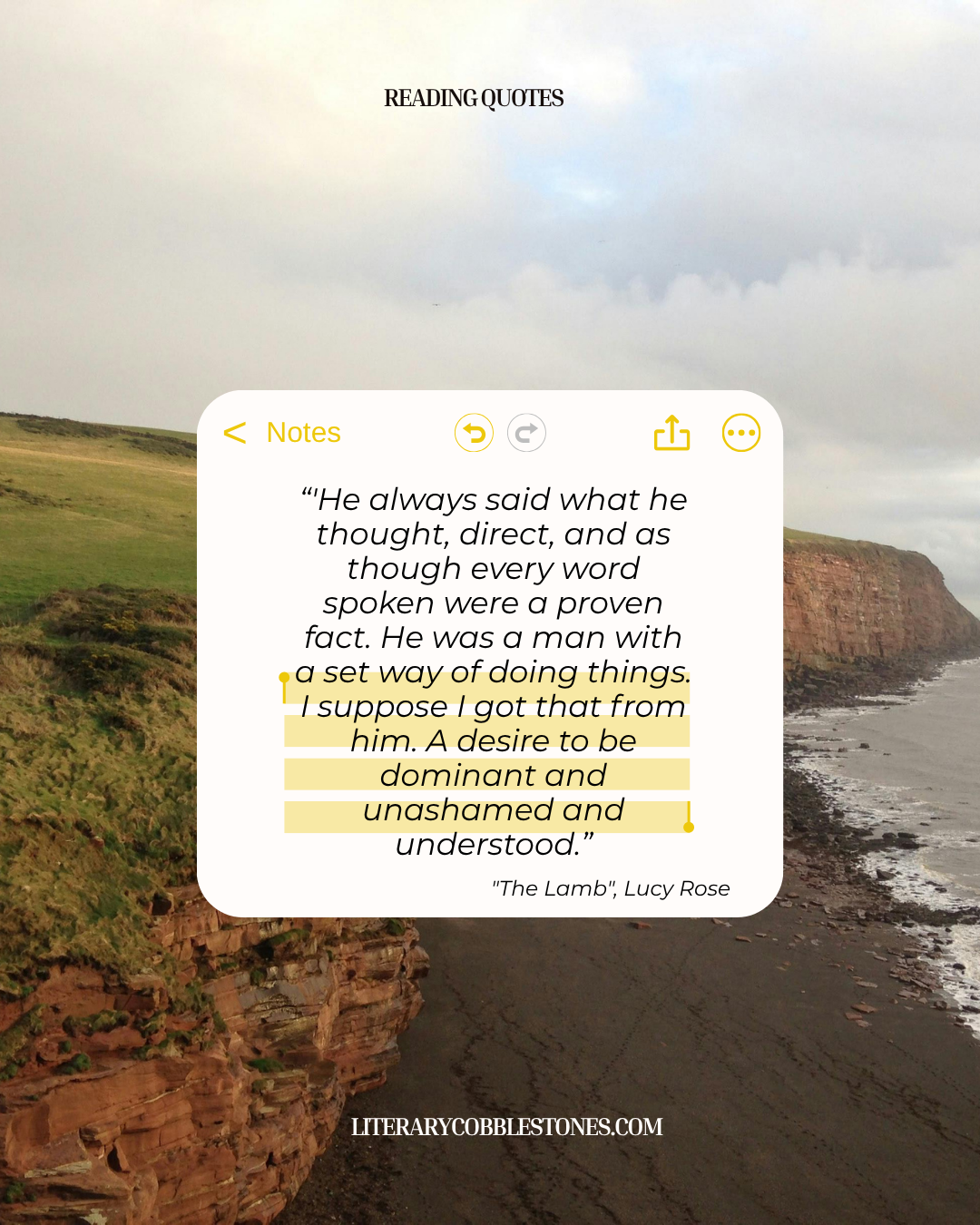
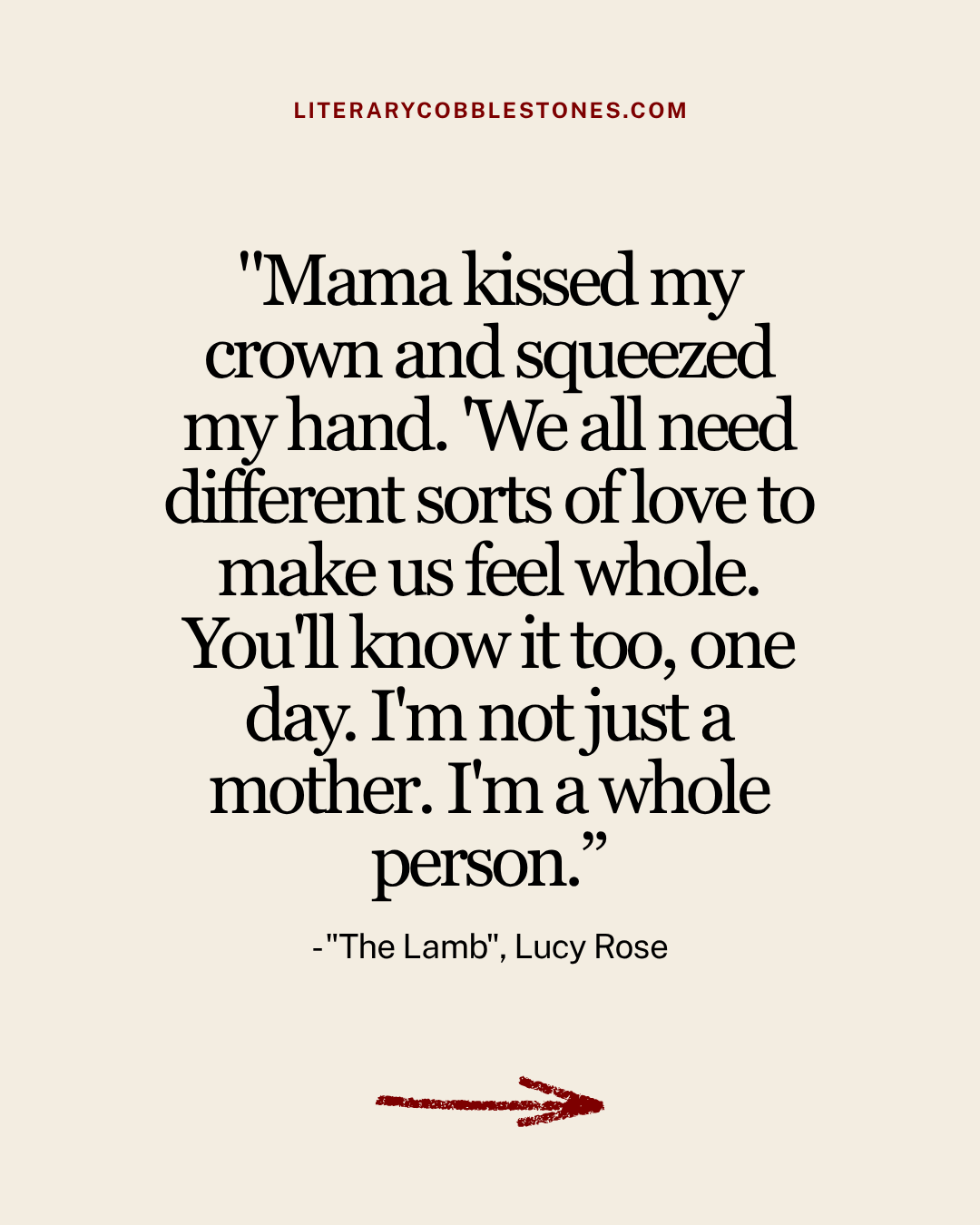
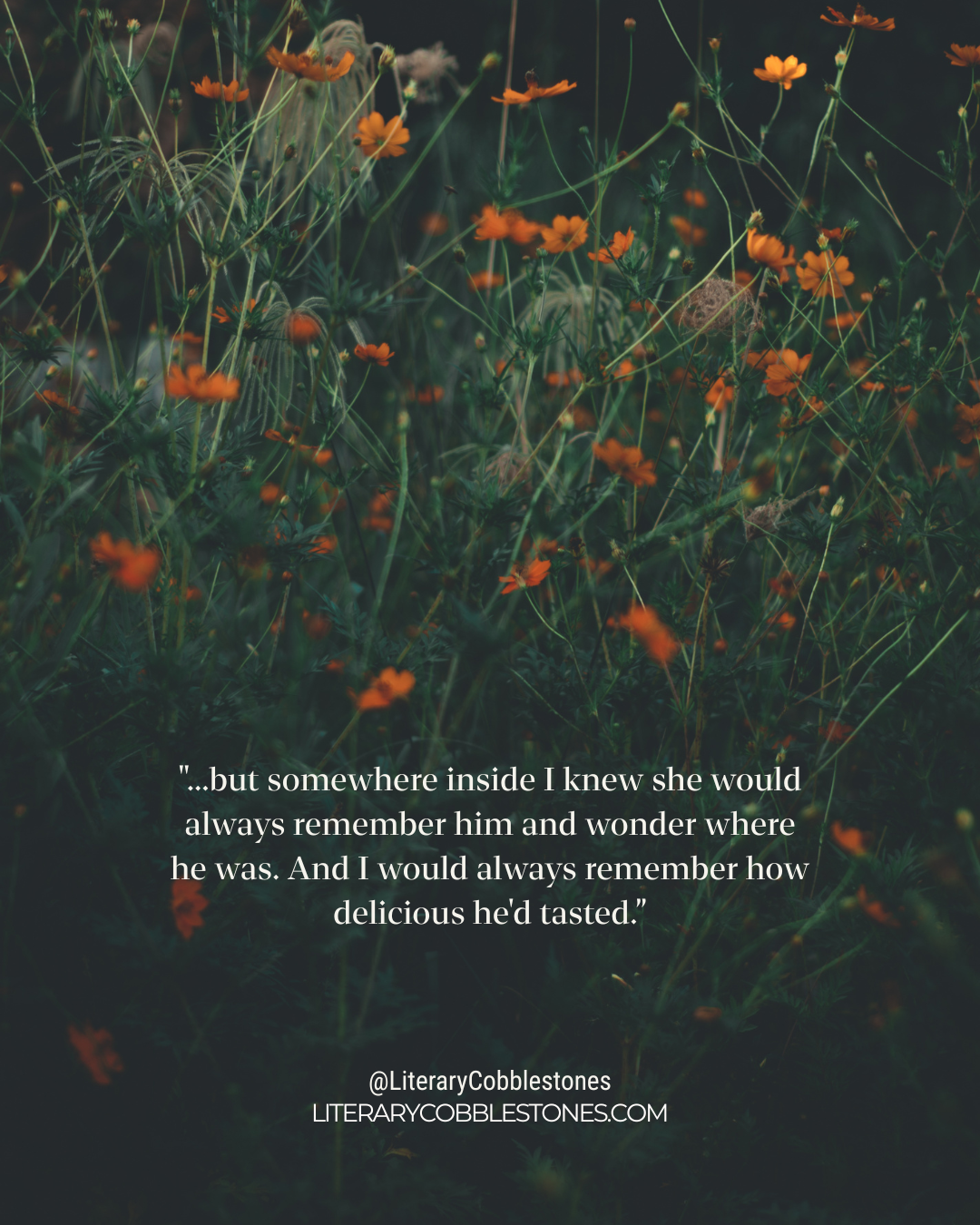
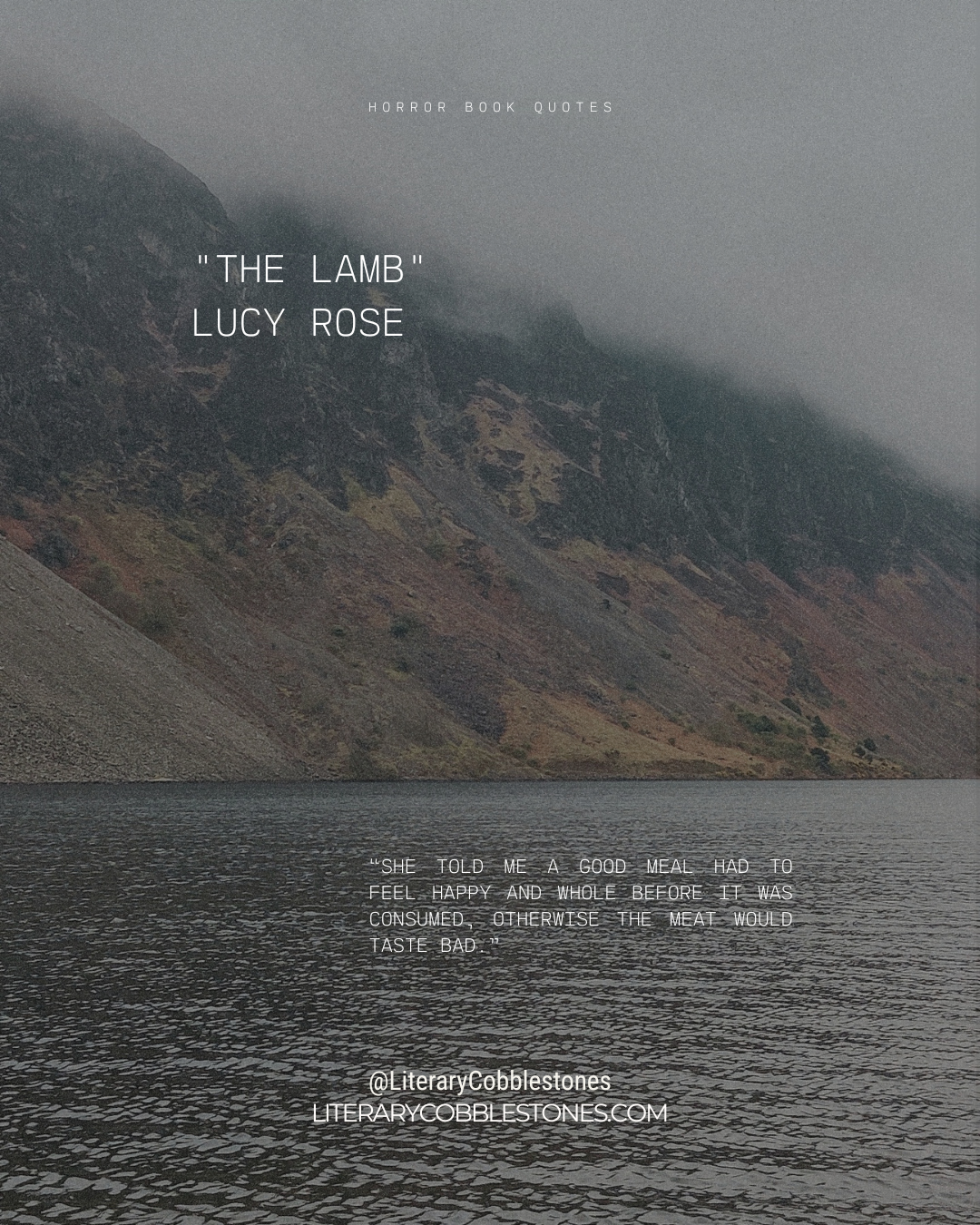
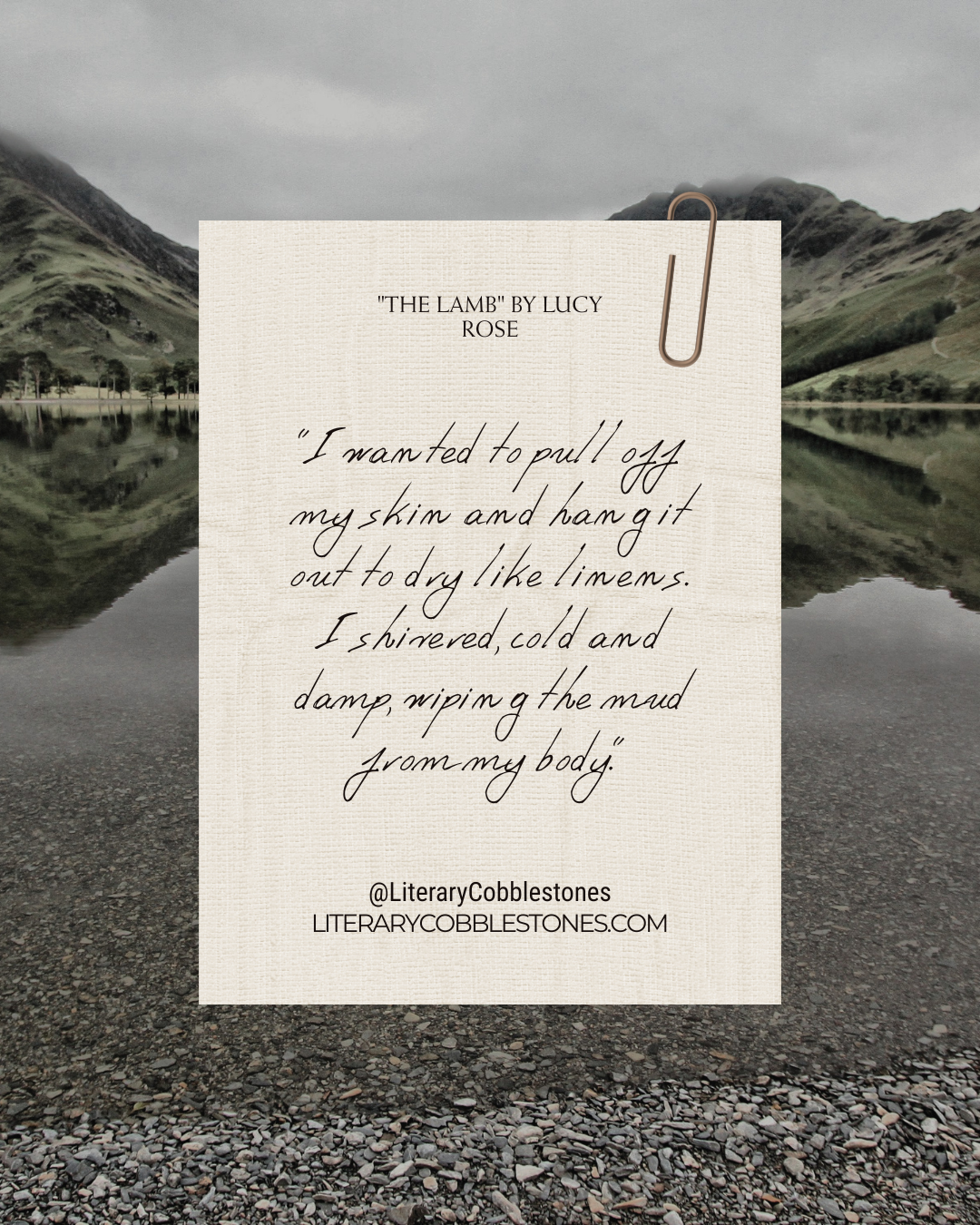
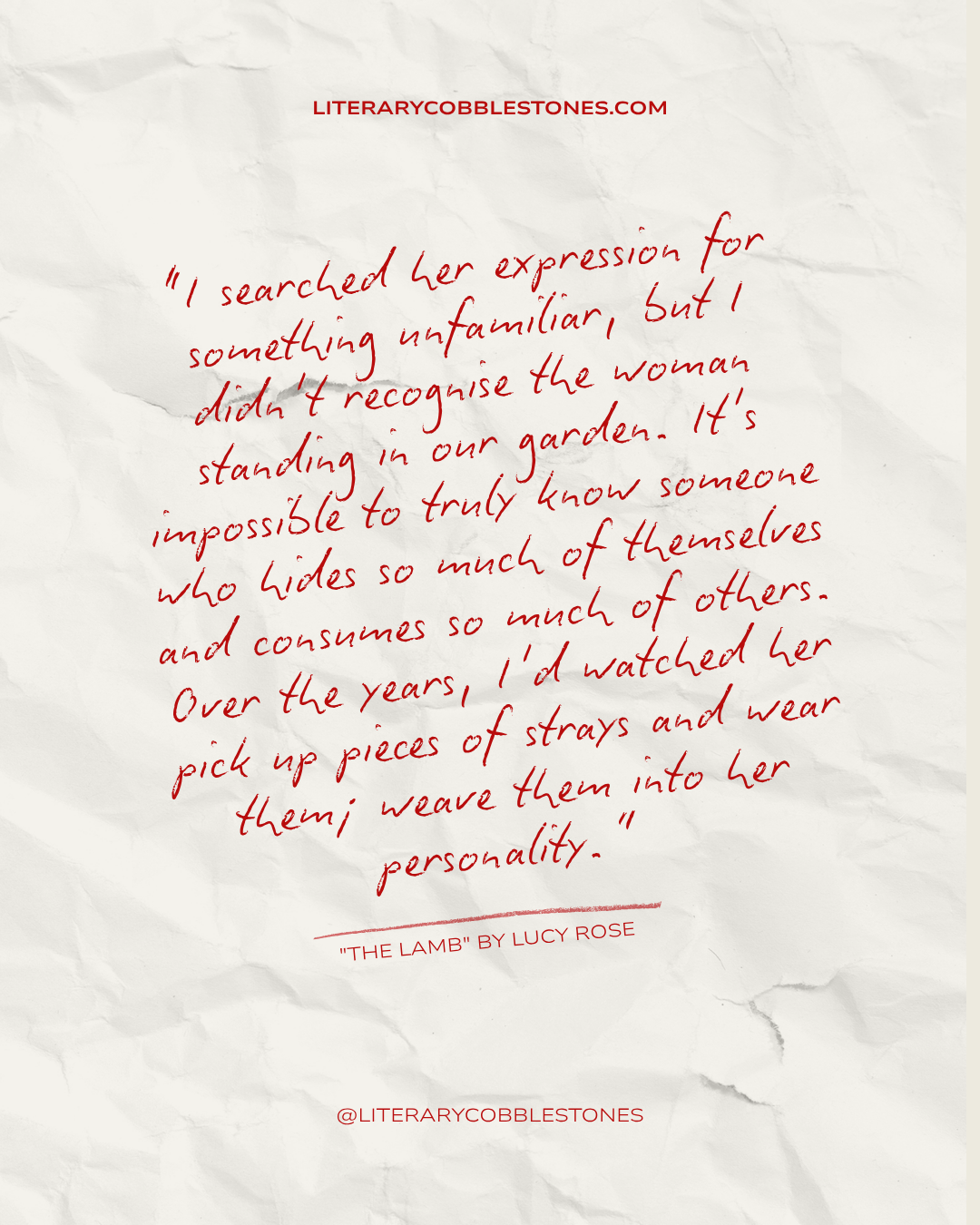
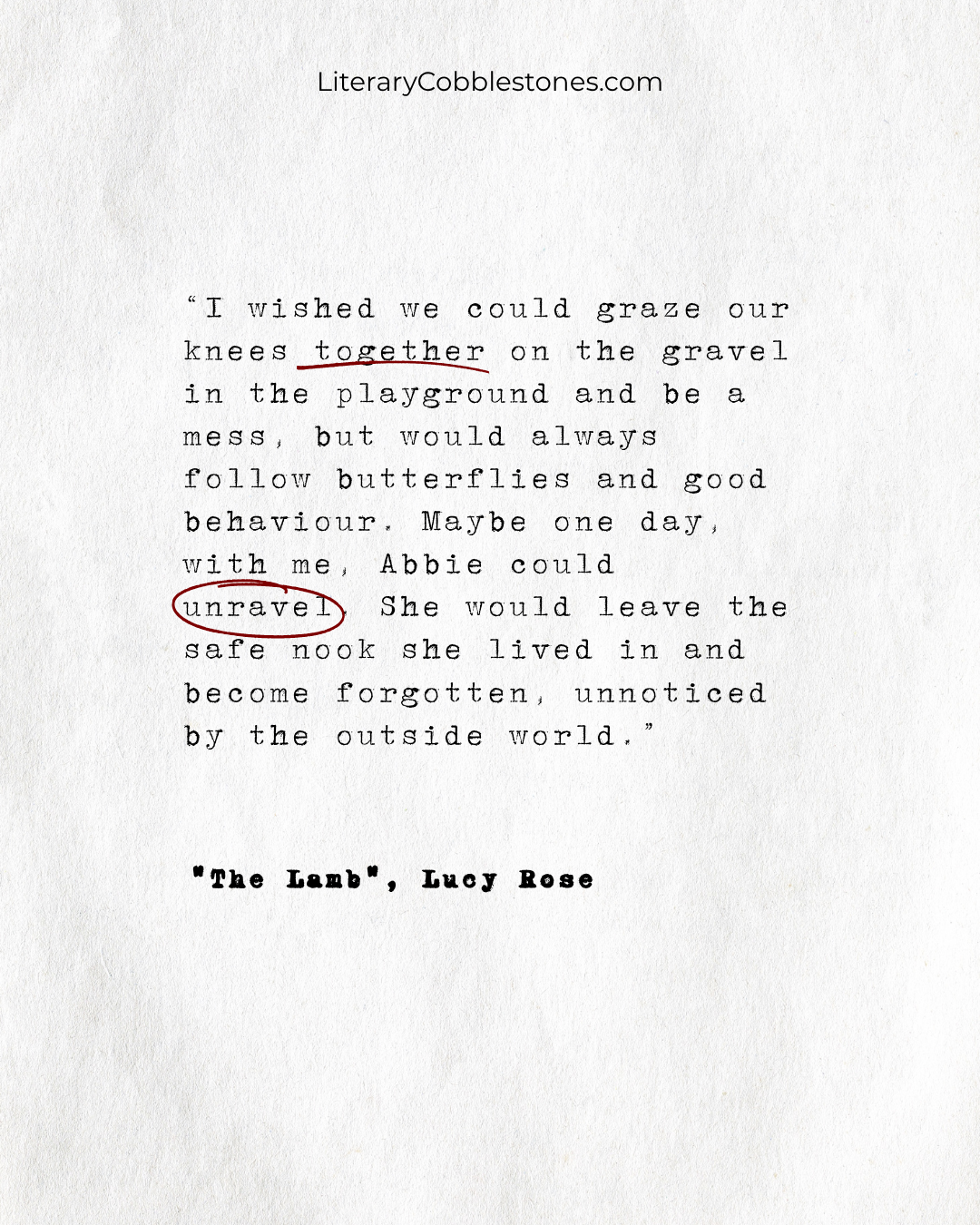
Lesbian Book Quotes: "The Lamb” by Lucy Rose
Follow For More Lesbian Book Reviews
Like what you see (or read)? Then come be my friend! I'd love to create a community of like-minded readers who love murder, mystery, and horror, especially with a sapphic or queer edge.
Follow my book blog:
🖤 Thanks -Tiff
More Sapphic Horror Reads
〰️
More Sapphic Horror Reads 〰️